
Nikolaos Papadogiannis
Senior Lecturer, School of Humanities, University of Stirling
Culture in the Years of the Metapolitefsi (Post-Dictatorship) Period
In the months that followed the restoration of democracy in Greece in 1974, mass concerts were held in Athens and Thessaloniki, which were documented by Nikos Koundouros in Songs of Fire [Ta Tragoudia tis Fotias]. A vibrant crowd appears to be demanding that the junta be “given to the people”. Shortly afterwards, from the late 1970s and throughout the 1980s, bars and pubs emerged in Thessaloniki and Athens, where patrons engaged in relaxed conversation, without necessarily seeking to organise mass mobilisations. Moreover, during the 1980s, bouzoukia became increasingly popular as venues where whisky flowed freely and patrons sought to display their affluence through the clothes they wore.
These are only some of the manifestations of the interaction between culture, on the one hand, and political and social developments in Greece during the post-dictatorship (Metapolitefsi) period on the other, which this text examines. My aim is to highlight how art functioned as culture (“art as culture”) (1) during this particular period; that is, rather than offering an aesthetic assessment of the period, I seek to investigate the socio-cultural contexts in which art was produced, circulated and received, as well as the meanings attributed to it. By “culture” I refer to symbols and practices without seeking to distinguish some of them as superior, as “high culture” or as “genuine culture”. (2) (2)
More specifically, I will examine how “art as culture” both influenced and was influenced by the formation of trends, often intertwined with one another, particularly in the spheres of politics and mass consumption. During this period, an expanding range of forms of collective engagement with artistic activities—in terms of attending, producing and participating—emerged. In some cases, this expanding range interacted with experimentation in the sphere of politics: questions such as the vertical or horizontal organisation of party and trade-union structures, as well as the stylistic uniformity or diversity of an organisation’s members, became open to an increasing variety of answers during these years.
I would argue that these partly intertwined developments cannot be understood as a linear trajectory: from the “hyper-politicisation” and the almost unambiguous valorisation of the “collective” during the early post-dictatorship years to a turn towards individualism in the late 1980s, a point which, according to Giannis Voulgaris and Nikos Sevastakis, also marks the end of the Metapolitefsi period. (3) Although it is true that social activism declined, particularly from the mid- to late 1980s, organised political action did not follow a single model of collectivity. Nor did withdrawal from such forms of collective action necessarily entail a turn towards the individual; rather, it involved different, often looser and more flexible forms of collectivity. In this sense, I would also be cautious about the concept of “mass individualistic democracy”, which, according to Vasilis Vamvakas and Panagiotis Panagiotopoulos, characterises the 1980s. (4) Although Vamvakas and Panagiotopoulos refer to new fields of inter-individual identities and not, at least necessarily, to an individual-centred retreat, I believe that the term “individualistic” can easily be understood as synonymous exclusively with the latter and, for this reason, I would prefer to avoid it. Instead, in order to understand this process of experimentation in the relationship between the individual and collectivity, Michael Warner’s concept of publics is particularly useful. In a free translation, these are groups of individuals who interact through the circulation of particular discourses (“a social space created by the reflexive circulation of discourse”). Their formation presupposes that a discourse is addressed to a public through texts, which may also form part of audiovisual material, such as films or songs. Another prerequisite for the existence of a public is that the individuals to whom this discourse is addressed respond to it in some way and to a greater or lesser degree. At any given time and within any given socio-cultural context, there may be multiple and diverse publics, making the concept a useful tool for exploring the diversity of social relations and models of politicisation in post-dictatorship Greece. (5) (5)
Moreover, analysing “art as culture” can contribute to a more complex examination of the chronological boundaries of the Metapolitefsi period. Is it legitimate to speak of “post-dictatorship” cultural processes in the sense that they emerged with the collapse of the dictatorship in 1974? As has been argued elsewhere, this is only partly the case: many of the cultural trends associated with the Metapolitefsi (post-dictatorship) period had already emerged during the dictatorship and in the final years before it. (6) Nor did they suddenly disappear in 1990. The period should therefore be understood as characterised by the crystallisation of trends that had already emerged during the “long 1960s” (7), while at the same time constituting a period in which developments that continue into the present crisis began to take shape.
The first part of the text examines the interrelationship between cultural trends and developments in politics and consumption from the mid-1970s through the early 1980s, while the second covers the period through the end of the 1980s. As is also the case with the periodisation of the Metapolitefsi period more generally, its division into sub-periods is to some extent arbitrary. I will therefore highlight cultural trends that extend over periods either longer or shorter than these sub-periods.
The analysis that follows draws both on my own research and on a substantial body of other recent publications on the subject. This material and, inevitably, the present text do not cover the full range of cultural processes of the Metapolitefsi period. Phenomena such as the role of migrant students and workers from Greece in Northern and Central Europe in the cultural exchange between these countries and their country of origin; the appropriation of punk music by the far right; and the reception of pornographic films during the period under examination are among the cultural trends that warrant further investigation. Finally, the article focuses primarily on developments in urban centres. Without in any way seeking to underestimate relevant trends in the regions, artistic developments in the cities have been investigated to a considerably greater extent. (8)
------------------------------------------------------
(1) Σχετικά με αυτή την έννοια, βλ. Evelyn Payne Hatcher, Art as Culture: An Introduction to the Anthropology of Art. Westport, CT: Bergin and Garvey, 1999.
(2) Για μια τέτοια προσέγγιση στον όρο «πολιτισμός», βλ. Έφη Αβδελά, Αγγέλικα Ψαρρά, “Ξαναγράφοντας το παρελθόν. Σύγχρονες διαδρομές της ιστορίας των γυναικών” στο Έφη Αβδελά, Αγγέλικα Ψαρρά (επιμ.), Σιωπηρές Ιστορίες. Γυναίκες και φύλο στην ιστορική αφήγηση, Αθήνα 1997, σ. 88-89.
(3) Νικόλας Σεβαστάκης, Κοινότοπη Χώρα. Όψεις του Δημόσιου Χώρου και Αντινομίες Αξιών στη σημερινή Ελλάδα, Αθήνα 2004. Γιάννης Βούλγαρης, Η Ελλάδα από τη Μεταπολίτευση στην Παγκοσμιοποίηση, Αθήνα 2008, σ. 15, 334-336. Για ορισμένες υποθέσεις για το εάν υπάρχει ένα συγκεκριμένος τέλος της Μεταπολίτευσης, βλ. Νικόλαος Παπαδογιάννης, «Νεανική Πολιτικοποίηση και ‘Πολιτισμός’ στα πρώτα χρόνια της Μεταπολίτευσης», στο Μάνος Αυγερίδης, Έφη Γαζή, Κωστής Κορνέτης (επιμ.), Μεταπολίτευση. Η Ελλάδα στο μεταίχμιο δυο αιώνων, Αθήνα 2015, σ. 147-149.
(4) Βασίλης Βαμβακάς - Παναγής Παναγιωτόπουλος, «Η Ελλάδα στη δεκαετία του ’80. Κοινωνικός εκσυγχρονισμός, πολιτικός αρχαϊσμός, πολιτισμικός πλουραλισμός», στο Βασίλης Βαμβακάς – Παναγής Παναγιωτόπουλος (επιμ.), Η Ελλάδα στη δεκαετία του ’80. Κοινωνικό, πολιτικό και πολιτισμικό λεξικό, Το Πέρασμα, Αθήνα 2010, σ. XLVII, LXV-LXVII.
(5) Για την έννοια του κοινού, βλ. Michael Warner, ‘Publics and counterpublics (abbreviated version)’, Quarterly Journal of Speech, 88.4, 2002, pp. 413-425. Ευχαριστώ τον Δημήτρη Παπανικολάου που μου επισήμανε τη συγκεκριμένη έννοια.
(6) Στο ζήτημα του κατά πόσο πολιτισμικές τάσεις που επικρατούν κατά τη διάρκεια της Μεταπολίτευσης είχαν ήδη εμφανιστεί πριν από το 1974, βλ.: Nikolaos Papadogiannis, Militant around the Clock? Left-wing youth politics, leisure and sexuality in post-dictatorship Greece, 1974-1981, London/New York 2015. Kostis Kornetis, Children of the Dictatorship. Student Resistance, Cultural Politics, and the «Long 1960s» in Greece, Oxford/New York 2013. Σπύρος Κακουριώτης, «Αδύναμη και Αδύνατη Συνέχεια: Η Μεταπολίτευση στο Εθνικό Θέατρο», στο: Βαγγέλης Καραμανωλάκης, Ηλίας Νικολακόπουλος, Τάσος Σακελλαρόπουλος (επιμ.), Η Μεταπολίτευση ’74-’75. Στιγμές μιας μετάβασης, Αθήνα 2016, σ. 201-223.
(7) Arthur Marwick, The Sixties: Cultural Revolution in Britain, France, Italy, and the United States, c.1958–c.1974, Oxford, 1998. Για την εφαρμογή αυτής της έννοιας στην Ελλάδα, βλ. Kornetis, Children.
(8) Για μια ανάλυση της καφετέριας ως ψυχαγωγικού χώρου με επιπτώσεις στις έμφυλες σχέσεις σε μεγαλύτερες και μικρότερες πόλεις στη Μεταπολίτευση, βλ. Jane K. Cowan, Dance and the Body Politic in Northern Greece, Princeton 1990. Η Cowan ανέλυσε και τα είδη μουσικής που ακούγονταν σε αυτούς τους χώρους.
The Post-Dictatorship Period of the 1970s
The collapse of the dictatorship in the summer of 1974 marked a series of fundamental ruptures, as Giannis Voulgaris has rightly pointed out. The democratic political system was consolidated relatively quickly, and henceforth the leading role was no longer played by institutions such as the Army or the Crown, but by political parties. (9) At the same time, anti-communism was dismantled and, after approximately thirty years, ceased to constitute the dominant ideology. (10) Until 1981, a phenomenon that Voulgaris aptly terms the “dualism of power” prevailed: New Democracy, the governing party during this period, determined the country’s international orientation, while PASOK and the Communist Left dominated mass social organisations, such as student unions. (11)
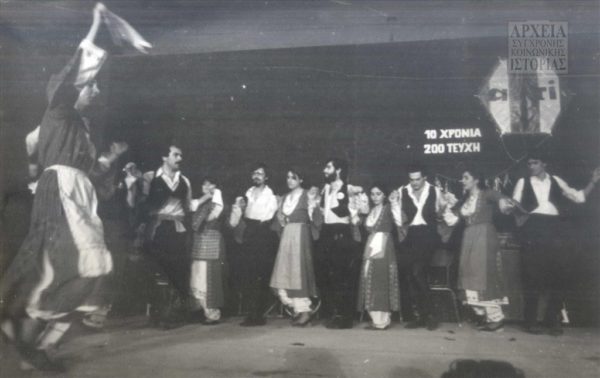
At the same time, while anti-Americanism was widespread among PASOK and the Communist Left, the positive valuation of the symbol of “America” also weakened within the political Right. (12) Whereas PASOK and the Communist Left generally looked towards a range of regimes and organisations, from the USSR to national liberation movements in the Third World, New Democracy increasingly oriented itself towards Greece’s accession to the EEC. (13)
The cultural trends of the post-dictatorship period of the 1970s did not simply reflect these political developments; they also contributed to shaping them. A key characteristic of the cultural processes of this period was the prominent role played by symbols of the Left in a large part of cultural production and reception. One could argue that this tendency constituted an element of the “dualism of power” identified by Voulgaris, particularly the dominance of symbols associated with the Communist Left and PASOK within mass social organisations. In this context, one can discern an explosion of memory concerning both the period of the Occupation (1941–1944) and the dictatorship of 1967–1974. (14) During this particular period—the post-dictatorship part of the 1970s—a range of literary texts, autobiographies, songs and films promoted the glorification of the Left’s actions, presenting it as either the sole or the dominant force of resistance both to the junta and to the occupation forces during the 1940s. (15)
A dominant motif in this discourse was a key feature of the Left’s cultural politics since the 1930s: the idealisation of the People as both a victim of the designs of foreign powers and their domestic collaborators, and as a collective endowed with an inherent propensity towards struggle and resistance. At the same time, from the early years of the post-dictatorship period, the Left’s call for a struggle against every form of Greece’s “dependency”—political, economic and cultural—on “imperialist centres” spread into the political space of the Centre and Centre-Left. (16) This phenomenon would continue into the following decade.
At the same time, however, countervailing trends can also be observed. A debate emerged among forces beyond the Right concerning the historicity and demystification of concepts such as “popular tradition”. More specifically, the writer Dimitris Hatzis initiated, in the journal Anti, a dialogue among diverse Left-wing voices in the humanities and cultural sphere concerning the concept of tradition. It is no coincidence that this exchange took place in Anti, which served as a forum for the expression of diverse views within the Communist Left and PASOK, rather than as the organ of any particular political party. (17) Within this debate, while some participants defended the prevailing Left-wing view that tradition was timeless and contained elements of militancy characteristic of popular culture, an opposing tendency also emerged. According to this view, tradition had emerged during a specific historical period and expressed that period. Moreover, it was not necessarily “militant” or “progressive”. (18) This tendency towards historicising tradition was adopted by sections of the Left, particularly the Communist Party of Greece–Interior (KKE Interior), as well as by autonomous Left-wing groups that emerged in student unions in the late 1970s.
Nevertheless, political colouring did not shape the entirety of cultural developments during these years. Tourism, for example, contributed to the legitimation, resilience and even expansion of venues such as discotheques in the major cities, whose patrons sang or danced to the rhythm of popular music. (19)
------------------------------------------------------
(9) Γιάννης Βούλγαρης, Η Ελλάδα της Μεταπολίτευσης, 1974-1990. Σταθερή δημοκρατία σημαδεμένη από τη μεταπολεμική ιστορία, Αθήνα 2001, σ. 31-33. Σχετικά με τα χαρακτηριστικά της Μεταπολίτευσης ως περιόδου εν γένει, βλ. και Δημήτρης Α. Σωτηρόπουλος, Ηλίας Νικολακόπουλος, Χρήστος Λυριντζής, «Εισαγωγή: Η ποιότητα και η λειτουργία της Τρίτης Ελληνικής Δημοκρατίας», στο Χρήστος Λυριντζής, Ηλίας Νικολακόπουλος, Δημήτρης Α. Σωτηρόπουλος, Κοινωνία και Πολιτική. Όψεις της Γ΄Ελληνικής Δημοκρατίας, Αθήνα 1996, σ. 19-42. Αξίζει να σημειωθεί ότι οι επιμελητές του συλλογικού αυτού τόμου, όπως φαίνεται και από τον τίτλο του, προτιμούν τον όρο «Γ΄ Ελληνική Δημοκρατία» έναντι του όρου «Μεταπολίτευση» για την περίοδο που ξεκινά με την κατάρρευση της χούντας.
(10) Βούλγαρης, Η Ελλάδα της Μεταπολίτευσης, σ. 29.
(11) Ό.π., σ. 37-43.
(12) Ζηνοβία Λιαλιούτη, Ο αντιαμερικανισμός στην Ελλάδα 1947-1989, Αθήνα 2016, σ. 453-454.
(13) Την ένταξη της Ελλάδας στην ΕΟΚ υποστήριζε και το ΚΚΕ Εσωτερικού, σε αντίθεση με τις υπόλοιπες δυνάμεις της κομμουνιστικής Αριστεράς. Βλ. Papadogiannis, Militant, σ. 99.
(14)Σχετικά με αυτή την έκρηξη μνήμης, βλ. Αντώνης Λιάκος, «Η Νεοελληνική Ιστοριογραφία το τελευταίο τέταρτο του 20ού αιώνα», Σύγχρονα Θέματα 76-77 (2001), σ. 72-91.
(15) Αξίζει να σημειωθεί ότι, εν γένει, κατά τη διάρκεια της Μεταπολίτευσης διευρύνθηκε η ελευθερία έκφρασης και στον χώρο της τέχνης, κατάσταση που ευνόησε και τη συγκεκριμένη έκρηξη μνήμης. Όμως, αυτό δεν σημαίνει ότι η λογοκρισία εξέλιπε πλήρως. Περί λογοκρισίας στην τέχνη ως πολιτισμό (και σε) αυτή την περίοδο, βλ. ενδεικτικά: Πηνελόπη Πετσίνη, Δημήτρης Χριστόπουλος, Η λογοκρισία στην Ελλάδα, Αθήνα 2016.
(16) Λιαλιούτη, Ο Αντιαμερικανισμός, σ. 469-470.
(17) Κώστας Καραβίδας, «Ένα έντυπο-καθρέφτης της Μεταπολίτευσης: Το Αντί στη συγκυρία της μετάβασης», στο Καραμανωλάκης, Νικολακόπουλος, Σακελλαρόπουλος (επιμ.), Η Μεταπολίτευση ’74-’75, σ. 225-238.
(18) Για αυτό τον διάλογο, βλ. Βενετία Αποστολίδου, Λογοτεχνία και Ιστορία στη Μεταπολεμική Αριστερά. Η Παρέμβαση του Δημήτρη Χατζή, 1947-1981, Αθήνα 2003, σ. 248-278. Παπαδογιάννης, Militant, σ. 180-182.
(19) Μιχάλης Νικολακάκης, «Τουρισμός και ελληνική κοινωνία την περίοδο 1945-1974», αδημοσίευτη διδακτορική διατριβή, Ρέθυμνο 2013, σ. 407
CInema
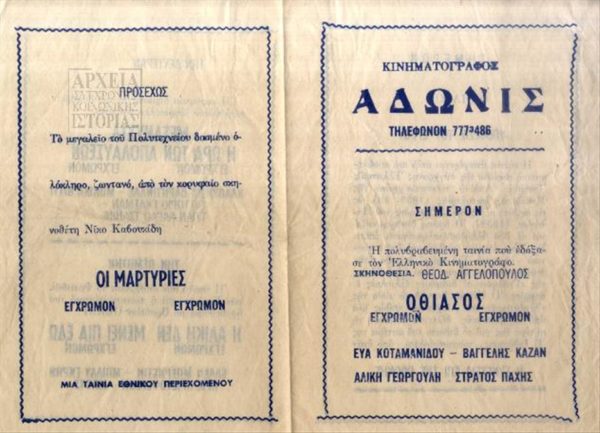
In the sphere of cinema, the politicisation and explosion of memory concerning the recent past also left their mark on the post-dictatorship period of the 1970s. Films of the New Greek Cinema (ΝΕΚ) (32) attracted large audiences. A notable example is Theo Angelopoulos’s The Travelling Players (O Thiassos, 1975), which traces the journey of a theatre troupe from 1939 to 1952 while simultaneously recording and commenting on the political developments of the period. Particularly characteristic is the scene in the nightclub, which symbolically represents the tensions that led to the Civil War. The Travelling Players sold 189,620 tickets in Athens and Piraeus during 1975–76.
Two years later, Angelopoulos’s The Hunters (Oi Kynigoi) was released. It depicts a group of bourgeois hunters who discover the body of a communist guerrilla from the 1940s and attempt to conceal it. The sight of the corpse, however, causes them to experience the nightmare that the guerrilla has come back to life. The Hunters was the third part of a trilogy that also included The Travelling Players and Days of ’36, which dealt with the crisis of parliamentary democracy in the 1930s. (33) Other highly popular films of the ΝΕΚ during this period included Pantelis Voulgaris’s Happy Day (1976) and Nikos Tzimas’s The Man with the Carnation (O Anthropos me to Garyfallo, 1980). Happy Day referred indirectly to the place of exile on Makronisos, while The Man with the Carnation dealt with the life and execution of Nikos Belogiannis.
Overall, as Maria Komninos aptly points out, these films both “mythologise recent history” and “reject fiction”. (34) On the one hand, to a greater or lesser extent, they present recent history from the perspective of the Left, responding to the declining “national-minded” discourse. On the other hand, films such as The Travelling Players employ techniques that are not intended to convey an easily digestible message. According to Eleftheria Kosmidou, The Travelling Players offered a “melancholic” approach to history: despite the sympathy with which it portrays the guerrillas, the film does not propose political solutions and does not contain the promise of the Left’s eventual triumph. (35)
If, during the first years of the post-dictatorship period, many New Greek Cinema films—and certainly its most popular productions—contributed to the memory boom concerning Greece’s recent past, towards the end of the 1970s ΝΕΚ films began to appear that placed greater emphasis on existential anxieties. Films such as Nikos Zervos’s Exile on Central Avenue (O Exoristos stin Kentriki Leoforo, 1979) and Nikos Nikolaidis’s The Wretches Are Still Singing (Ta Koureλια Tragoudane Akoma, 1979) presented, as Basteas argues, a traumatic experience of the end of collectivity, whether in the form of a political organisation or a group of friends. (36) They were not necessarily “post-political”, of course. (37) Rather, they constituted cultural material that inspired a segment of the public frequenting bars and seeking new forms of collectivity. Some of this public also participated in the mass occupations of university departments in December 1979. (38)
In addition to the large number of films produced and screened, the early years of the post-dictatorship period were also characterised by the publication and republication of cinema-related magazines. A characteristic example is Contemporary Cinema (Synchronos Kinimatografos), which had first appeared during the dictatorship and was republished during the post-dictatorship period. One of its contributors was Christos Vakalopoulos, a member of Rigas Feraios, who during the early years of the post-dictatorship period employed “strictly codified concepts”, such as the ideological apparatus of the State, under the influence of structuralist Marxism, semiotics and psychoanalysis. (39) At the same time, he praised films such as The Travelling Players (O Thiassos), which, in his view, did not convey an unambiguous message. In this respect, he differed from reviews in Left-wing publications such as Rizospastis, the newspaper of the KKE, which sought to extract or attribute a very specific “progressive” meaning, as they understood it, to the films they praised. Cinema during the early post-dictatorship years was therefore not entirely one of the spaces in which an oppositional, counter-hegemonic public sphere was formed, as Komninou argues. (40) Rather, it contributed to the emergence of a range of publics with different understandings of collectivity.
The ΝΕΚ was, of course, not the only cinematic genre circulating in post-dictatorship Greece. Hollywood films were major box-office successes: Jaws, for example, sold 326,996 tickets in Athens and Piraeus during 1975–76. The same was true of softcore and hardcore pornographic films, which flourished during the 1970s not only in Greece but also in other Southern European societies undergoing the transition from dictatorship to democracy, such as Spain and Portugal. (41) In Greece, erotic cinema developed from the early 1970s through the post-dictatorship period. Well-known actors from popular cinema, such as Anna Fonsou and Phaidon Georgitsis, appeared in these films. Directors included figures such as Omiros Efstratiadis. It is noteworthy that some of these films also used music by Manos Loizos. As Orsalia Kassaveti notes, when journalists and critics accused Efstratiadis of making hardcore pornography, he responded: “With Aris Stavrou as cinematographer, Fotopoulos as production designer and Loizos providing the music, could the film possibly have been porn?” (42) At the beginning of the decade, these were films belonging to the soft erotic cinema genre. Following the fall of the dictatorship, the plot became largely a pretext and erotic scenes were added. One such film was Her Pleasure-Loving Body (To Filidono Kormi Tis, 1975). According to Kassaveti, hardcore pornographic films began to appear from the 1980s onwards, including Nasos Spyri’s (Berto) From Behind with Love (Apo Piso me Agapi kai pio Malaka, 1983). (43)
------------------------------------------------------
(32) Ο όρος «ΝΕΚ» χρησιμοποιείται από τους υποστηρικτές του σε αντίστιξη με τον λεγόμενο «εμπορικό» ή «Παλαιό Ελληνικό Κινηματογράφο». Ο ΝΕΚ είχε στόχο να βασίζεται σε πιο σύνθετα σενάρια σε σχέση με τον λεγόμενο «ΠΕΚ».
(33) Σχετικά με το έργο του Αγγελόπουλου εν γένει, βλ. και Ειρήνη Στάθη, Μαίρη Κιτροέφ (επιμ.), Θόδωρος Αγγελόπουλος, Θεσσαλονίκη, 2012.
(34) Μαρία Κομνηνού, Από την αγορά στο θέαμα. Μελέτη για τη συγκρότηση της δημόσιας σφαίρας και του κινηματογράφου στη σύγχρονη Ελλάδα, 1950-2000, Αθήνα, 2001, σ. 168-169.
(35) Eleftheria Rania Kosmidou, European Civil War Films. Memory, Conflict and Nostalgia, New York, 2013, σ. 133, 138, 143.
(36) Παναγιώτης Μπαστέας, «Από το κοινωνικό στο υπαρξιακό», στο: Διαμάντης Λεβεντάκος (επιμ.), Όψεις του Νέου Ελληνικού Κινηματογράφου, Αθήνα 2002, σ. 138-144.
(37) Ό.π., σ. 142.
(38) Για τις συγκεκριμένες καταλήψεις, βλ. Papadogiannis, Militant, σ. 225-251.
(39) Κώστας Λιβιεράτος, Η ονειρική υφή της πραγματικότητας, Αθήνα 2005, σ. 17.
(40) Κομνηνού, Από την Αγορά, σ. 155.
(41) Kostis Kornetis, Eirini Kotsovili, Nikolaos Papadogiannis, ‘Introduction, in Kostis Kornetis, Eirini Kotsovili, Nikolaos Papadogiannis (επιμ.), Consumption and Gender in Southern Europe since the Long 1960s, London/New York, σ. 12.
(42) Ορσαλία Κασσαβέτη, Ανεστραμμένα Κοσμοείδωλα: Μια πολιτισμική ανάλυση των δημοφιλών κινηματογραφικών ειδών, Θεσσαλονίκη 2017, σ. 80
(43) Ό.π., σ. 82.
Theatre
As far as theatre is concerned, the number of tickets sold for theatrical performances was lower than the box-office success of films: overall, tickets sold for theatre performances during the first period of the post-dictatorship era amounted to approximately 5 to 10 per cent of cinema ticket sales. (44) Nevertheless, theatre performances had a stable audience, allowing a series of developments and debates to take place in the theatrical sphere during this period. Compared with the period 1967–1974, there were both ruptures and continuities. First of all, new theatre companies emerged, such as the Popular Experimental Theatre, while some that had already existed, such as the Free Theatre, continued to be active, at least during some of the years of this period. (45)
As far as theatre is concerned, the number of tickets sold for theatrical performances was lower than the box-office success of films: overall, tickets sold for theatre performances during the first period of the post-dictatorship era amounted to approximately 5 to 10 per cent of cinema ticket sales. (44) Nevertheless, theatre performances had a stable audience, allowing a series of developments and debates to take place in the theatrical sphere during this period. Compared with the period 1967–1974, there were both ruptures and continuities. First of all, new theatre companies emerged, such as the Popular Experimental Theatre, while some that had already existed, such as the Free Theatre, continued to be active, at least during some of the years of this period. (45)
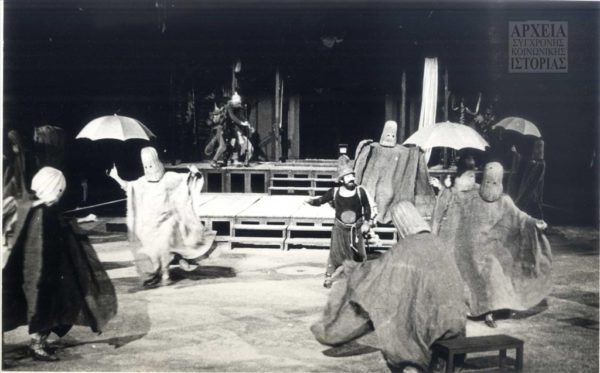
New playwrights and theatre-makers also emerged, such as Mitsos Efthymiades. During the post-dictatorship part of the 1970s, contemporary Greek drama accounted for an increasingly large proportion of theatrical productions, reaching as much as 33 per cent of performances during certain periods. (46) Nevertheless, works by non-Greek authors, such as Brecht, continued to enjoy widespread circulation. (47) Finally, publications that had first appeared during the dictatorship, such as Theatre (Theatro), were reissued. In fact, Platon Mavromoustakos speaks of a “significant flourishing” of publishing activity related to theatre during the early years of the Metapolitefsi (post-dictatorship) period. (48)
During the same period, the theatre was characterised by an intense political climate, which, as Mavromoustakos aptly points out, had already emerged during the years of the dictatorship. (49) This politicisation concerned a range of features relating both to the content of theatrical works and to the organisation of theatre companies.
More specifically, works dealing with Greece’s past became widely popular, referring not only to the twentieth century but also to the nineteenth. A prominent role was played by criticism of “dependency” on foreign powers, which was emphasised, for example, in Iakovos Kambanellis’s Our Great Circus (To Megalo mas Tsirko, 1972–73), which was first staged under the dictatorship and made a dynamic return during the post-dictatorship period.
At the same time, anti-hierarchical experiments in collaboration within theatre companies that had emerged in the early 1970s continued. One example was the way the Free Theatre operated, without a director. Instead, the selection of theatrical texts and the development of the performance were determined through consultation among the actors. The demand for political theatre, however, did not enjoy universal acceptance. Specifically, the National Theatre did not select, for its 1974–75 repertoire, plays that could be considered politically charged. (50)
(44) Efi Venizelou and Maria Thanopoulou, ‘Cultural Activities’, in: Dimitris Charalambis, Laura Maratou-Alipranti, and Andromachi Hadjiyanni (eds.), Recent Social Trends in Greece 1960–2000, Quebec 2004, σ. 568.
(45) Για την οπτική ενός από τους συντελεστές του Ελεύθερου Θεάτρου πάνω στη διαδρομή του, βλ. Γιώργος Κοτανίδης, Όλοι μαζί, Τώρα!, Αθήνα 2011.
(46) Πλάτων Μαυρομούστακος, Το θέατρο στην Ελλάδα 1940-2000: μια επισκόπηση, Αθήνα, 2005, σ. 156. Για μια άλλη τάση, την αντιμετώπιση της αρχαίας τραγωδίας και στην περίοδο υπό εξέταση, βλ. Eleftheria Ioannidou, Greek Fragments in Postmodern Frames. Rewriting Tragedy 1970-2005, Oxford 2017.
(47) Για τη διάδοση των έργων του Μπρεχτ στη Μεταπολίτευση, ιδίως στους αριστερούς νέους, βλ. Nikolaos Papadogiannis, “An Eastern Bloc cultural ambassador? Brecht’s reception by young left-wingers in Greece in the 1970s”, in: Christopher Balme, Berenika Szymanski (eds.), Theatre, Globalisation and the Cold War, New York/London, forthcoming, 2017. Για τη διάδοση του Μπρεχτ στην Ελλάδα επί χούντας, βλ. Gonda van Steen, Stage of Emergency. Theater and Public Performance under the Greek Military Dictatorship of 1967-1974, Oxford 2014. Για τις παραστάσεις έργων μη Ελλήνων συγγραφέων από τα τέλη της δεκαετίας του 70 μέχρι και τις αρχές της δεκαετίας του 2000, βλ. και Ελένη Βαροπούλου, Το θέατρο στην Ελλάδα. Η παράδοση του καινούργιου, 1974-2006, τόμος β΄, Αθήνα 2011.
(48) Μαυρομούστακος, Το θέατρο, σ. 163-168.
(49) Ό.π.
(50) Κακουριώτης, «Αδύναμη και Αδύνατη Συνέχεια».
Visual Arts
In the field of the visual arts, the first period of the Metapolitefsi (post-dictatorship) era witnessed the spread of trends that had emerged during the 1960s. One such trend was the use of collage by Greek artists influenced by Surrealism and Dadaism, as part of an effort, as Elena Chamalidi argues, to “approach the ‘real’ critically without resorting to realistic representation”. (51)
In the early years of the post-dictatorship period, collage was adopted by a variety of periodicals, such as Chroniko and Sima during its first period (1975–1979). (52) Collage, of course, was not the only trend in the visual arts in Greece during the post-dictatorship period. Another manifestation of the visual arts of this era was the work of the printmaker Tassos, who had already been active as an artist during the interwar period. During the junta, he lived in self-imposed exile abroad, but returned to Greece during the post-dictatorship period, when he exhibited his work at the National Gallery (1975).
------------------------------------------------------
(51) Έλενα Χαμαλίδη, «Το πρωτοποριακό αίτημα της «ένωσης τέχνης και ζωής» στην ελληνική σύγχρονη τέχνη κατά την περίοδο 1960-1980, στο Αυγερίδης, Γαζή, Κορνέτης (επιμ.), Μεταπολίτευση, σ. 290
(52) Χαμαλίδη, ό.π., σ. 295
Literature
With regard to trends in literature more broadly, although the principles of Socialist Realism had already been abandoned at the level of literary production during the period 1947–1967, certain political organisations, such as the KKE, continued to promote them as a model during this period as well. (53) At the beginning of this period, calls emerged for experimentation within a form of dual avant-garde, both artistic and social, engaging in dialogue with currents such as Surrealism. Publications in the journal Speira are indicative of this tendency. By the end of the decade, however, this trend had receded, according to Maria Nikolopoulou. (54)
In literature more generally, poetry predominated over prose during this period. Key characteristics of poetic production at the time included a preference for free verse, as well as the discontinuation of collective publications, which had flourished during the dictatorship. (55) Nevertheless, prose did not disappear altogether. On the contrary, prose works engaged in a dialogue with the memory boom that emerged during the early Metapolitefsi (post-dictatorship) years. Some of them, according to Beaton, “dramatized the events [of the Polytechnic uprising]”: (56) Margarita Lymberaki’s To Mystirio (1976), Alexandros Kotzias’s Antipoiisis Archis (1979), and Maro Douka’s I Archaia Skouria (1979). Aris Alexandrou’s Mission Box (To Kivotio, 1975), meanwhile, adopted a considerably more critical stance towards the Left than the films and songs mentioned above in their treatment of the Civil War. Mission Box refers to the final stages of the Greek Civil War. A group of guerrillas transports a casket from one town to another, following an order from the leadership of the Communist Party, without knowing what it contains. Eventually, all of them die except the narrator, who delivers the casket, only to discover that it is empty. The guerrilla is then imprisoned by other guerrillas as a saboteur. Mission Box contributed to the emergence of a tendency that would become more pronounced during the period 1981–1990: namely, the use of art as a means of self-criticism and reflection on the course of the Left in Greece and internationally.
------------------------------------------------------
(53)Για το σχόλιο αυτό και για σχετική βιβλιογραφία, βλ. Μίλτος Πεχλιβάνος, Από τη «Λέσχη» στις «Ακυβέρνητες Πολιτείες». Η στίξη της ανάγνωσης, Αθήνα 2008, σελ 193. Για τη στάση της Αριστεράς στο σοσιαλιστικό ρεαλισμό, βλ. Papadogiannis, Militant, σ. 144.
(54) Μαρία Νικολοπούλου, «Η αμήχανη ανάδυση του Underground και το αίτημα της διπλής πρωτοπορίας στο λογοτεχνικό πεδίο της Μεταπολίτευσης», στο Αυγερίδης, Γαζή, Κορνέτης (επιμ.), Μεταπολίτευση, σ. 263-282.
(55) Roderick Beaton, Εισ
αγωγή στη νεότερη ελληνική λογοτεχνία. Ποίηση και πεζογραφία 1821-1992, Αθήνα, 1996, σ. 346-354. Για τη σύγχρονη ελληνική πεζογραφία, βλ. και Αγγελική Σπυροπούλου, Θεοδώρα Τσιμπούκη (επιμ.), Σύγχρονη Ελληνική Πεζογραφία, Αθήνα 2002.
(56) Beaton, Εισαγωγή, σ. 335.
The 1980s
From the beginning of the 1980s, a number of developments emerged which, according to Vamvakas and Panagiotopoulos, constituted a “second post-dictatorship phase” corresponding to the decade in question. (57) More specifically, these developments included “the gradual withdrawal of the political from the social sphere”, the “early development” of an individualism fostered by state-supported welfare policies, the recognition of minority demands and identities, and the consolidation of social cohesion. (58) Another characteristic of this phase was the management of cultural traumas arising either from political exclusion or affecting those who had been unable to benefit from the rapid upward social mobility of the post-war decades. (59)
Within the context of these transformations, one can also identify a series of specific processes in the fields of politics and ideology, as well as consumption, which interacted with changing trends in the sphere of art. In the political scene, a major transformation was PASOK’s rise to power, which led to two pivotal changes in state structures, as Vamvakas and Panagiotopoulos aptly observe: their expansion and democratisation. In the sphere of consumption, continuing a trend that had first emerged during the previous period in venues such as bars, consumption practices contributed to the socialisation of small groups with loose forms of cohesion. Finally, particularly towards the end of the decade, and with the decisive contribution of the magazine Klik, the consumption of, or desire to consume, luxury goods became increasingly free of stigma.
These characteristics both influenced and were influenced by various manifestations of art. Specifically, forms of politicised art that had emerged or spread further during the first period of the post-dictatorship era were incorporated for the first time into state cultural policy. At the same time, however, many manifestations of politicised art experienced a decline in popularity, which also reflects the withdrawal of the political from the social sphere identified by Panagiotopoulos and Vamvakas. As will become apparent below, however, the second post-dictatorship phase was neither a period of complete depoliticisation nor one of individualism. Rather, it was a period in which new forms of political mobilisation emerged. Moreover, the “social” more generally—whether in the form of organised political collectivities or otherwise—underwent increasingly intensive experimentation in the relationship between the individual and collectivity, a process that had already begun towards the end of the 1970s, as noted above. These processes, interacted with and were reinforced by developments in the sphere of art.
------------------------------------------------------
(57) Βαμβακάς, Παναγιωτόπουλος, «Η Ελλάδα στη δεκαετία του ’80», σ. XXXV.
(58) Ό.π.
(59) Ό.π.
(60) Ό.π.
Cinema–Television–Video
Specifically, with regard to cinema and television, both continuities and ruptures can be observed in trends that had emerged during the previous period. The New Greek Cinema contributed to a change in the way the Communist Left and PASOK approached memories of the recent past. In Theodoros Angelopoulos’s film Voyage to Cythera (1984), although the historical-political dimension present in his earlier films does not disappear, greater emphasis is placed on the existential concerns of individuals, such as loneliness and old age.
The subject matter, as Soldatos points out, is more “anthropocentric”, something that becomes even clearer in the same director’s The Beekeeper (1986). (61) In The Beekeeper, the motif of defeat at both the political and erotic levels is dominant, with the protagonist having been politically active during the years of the Resistance and the Civil War before subsequently settling into a conventional life. At the same time, films that placed a clear emphasis on the existential dimension continued to be produced by directors associated with the New Greek Cinema. Two relevant examples, which address issues of gender and sexual orientation, are Revanche (1983) by Nikos Vergitsis and Angel (1982) by Giorgos Katakouzinos. A major rupture observed at the beginning of the 1980s was the flourishing of the so-called commercial Greek cinema. A characteristic example is Roda, Tsanta kai Kopana (1982). Actors who starred in the film, such as Stamatis Gardelis and Steve Douzos, became emblematic figures of the “commercial” cinema of the period. The same applies to an actor who did not appear in this particular film, Stathis Psaltis, who established himself during the decade through his uninhibited language and self-deprecating humour.
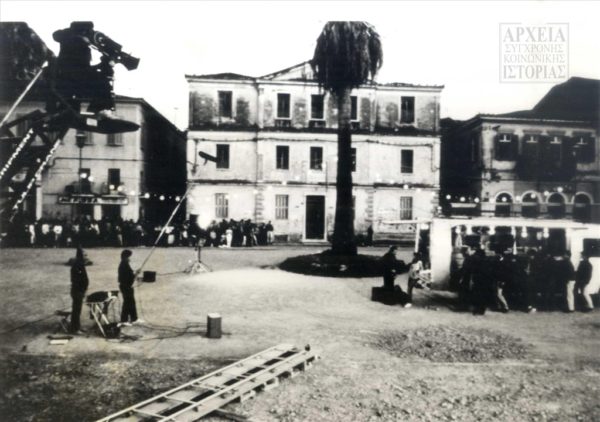
In terms of audiovisual culture as a whole, cinema began to lose popularity in the mid-1980s due to the spread of video. The rise in the standard of living of the middle and lower social classes led to increased consumption of modern technological household goods, the acquisition of which was also regarded as an indicator of an improvement in the social status of their owners. (62) In September 1986, approximately 10 per cent of households in Greece were estimated to own a video player. By March 1987, the figure had risen to 18 per cent, encouraging production companies to turn towards films intended for viewing on video. (63) Video contributed to the formation of publics, such as small groups of people who watched films together in someone’s home. The audiences for video films were often differentiated according to gender and age. Men, for example, preferred adventure films or films related to martial arts. By contrast, soap operas such as Dallas and Dynasty were particularly popular among women; these were also broadcast on public television in Greece during this period. (64) Japanese anime films, such as Kagemaru Ingano, were aimed at children. Overall, according to Kassaveti, without overturning the dominant heteronormative order, certain hardcore pornographic films made for video and directed by Aloma, president of the trans community in Greece, made non-dominant gender identities more visible. One such example is the film Vlachs Prefer Transvestites [Oi vlachoi protimoun travesti] (1989). In any case, the viewing of video films soon went into decline, particularly from the beginning of the 1990s, due to the emergence of private and satellite television. (65)
------------------------------------------------------
(61) Γιάννης Σολδάτος, Ιστορία του Ελληνικού Κινηματογράφου, 2ος τόμος, 1967-1990, Αθήνα 2010, σ. 150, 179-180.
(62) Γιάννης Μυριζάκης, «Η διείσδυση της σύγχρονης τεχνολογίας στο ελληνικό σπίτι και η στάση των Ελληνίδων μητέρων απέναντι στη σύγχρονη τεχνολογική εξέλιξη και την πυρηνική ενέργεια», Επιθεώρηση Κοινωνικών Ερευνών 53, 1984, σ. 55-73.
(63) Για τα αποτελέσματα σχετικών της ICAP, βλ. Ursula-Helen Kassaveti, “Audio-visual consumption in the Greek VHS era: Social mobility, privatization and the VCR audiences in the 1980s, στο Kostis Kornetis, Eirini Kotsovili, Nikolaos Papadogiannis (επιμ.), Consumption and Gender in Southern Europe since the Long 1960s, London/New York, σ. 244.
(64) Περί τάσεων στην τηλεόραση στην Ελλάδα και στην υπό εξέταση περίοδο, βλ. Franklin Hess, “Singular Visions, Multiple Futures: Culture, Politics, and American Mass Media in Modern Greece.”, διδακτορική διατριβή, University of Iowa, 1999.
(65) Kassaveti, “Audio-visual”, σ. 249-251.
Music
One of the significant developments in the field of music during this period was the emergence of contradictory trends surrounding political song. On the one hand, the genre gained institutional legitimacy through its incorporation into school commemorations, particularly those marking the anniversary of the Polytechnic uprising, where it played a crucial role. (66) On the other hand, musical production during the 1980s was dominated either by a retreat from political engagement, as in the music of Vangelis Germanos, or by new forms of political activism, as illustrated by the convergence of anarchist and punk scenes.
Punk spread across numerous countries in Western and Eastern Europe, including Britain, West Germany and Yugoslavia. In Greece, the first punk groups emerged in Athens and Thessaloniki towards the end of the 1970s. From this period and throughout the 1980s, Greek punk bands also began to appear, including Pneumonokoniosis and Parthenogenesis, followed somewhat later by Genia tou Chaous (Generation of Chaos). The band Trypes, formed in Thessaloniki in 1984, also emerged from the city’s punk scene.
In general, a defining characteristic of punk in Greece was an appearance that deliberately deviated from dominant norms. Punk styles incorporated materials such as decorative studs, razor blades and car emblems attached to clothing, as well as spiked hair. Some punks also placed swastikas on their clothes to provoke, without necessarily subscribing to Nazism. Aggressiveness was another characteristic of punk, in contrast to the pacifist spirit of the hippies, towards whom punks were openly hostile. Punk adherents also sought to remain outside commercial circuits and to operate according to the do-it-yourself principle. In Athens, they initially gathered in Plaka, where they bought materials for their clothing from particular boutiques. According to Giannis Kolovos, this did not conflict with the DIY ethos, since punks regarded these boutiques primarily as socializing places and only secondarily as sites of consumption. Rather than purchasing ready-made punk clothing, they largely fashioned their own outfits by cutting, tearing, sewing and writing on the clothes they bought with markers. (67)
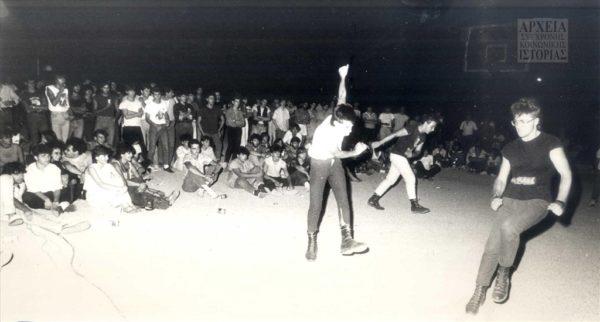
By the mid-1980s, following a period of wandering between different locations, Athens punks had begun to gather in Exarchia, where they came into contact with anarchists. This convergence was reflected in occupied spaces such as Villa Amalias, where punks played a leading role. (68) Punk music also became a key component of self-managed radio stations, such as Radio Utopia, particularly its programme Ta Kourelia (The Rags). (69) At the same time, punk was also incorporated into state cultural policy. Internationally renowned punk bands such as the Stranglers and the Clash visited Athens in 1985, where, on 26 and 27 July, they performed alongside British pop artists at the Rock in Athens festival, the first major pop and rock music event of its kind in Greece. (70) From 1986 onwards, Greek punks also became increasingly involved in transnational networks. For example, they sent letters to the pages of the American fanzine Maximum Rock ’n’ Roll and established contacts with self-managed spaces in Europe and North America, where they were hosted and performed concerts. (71)
Heavy metal music also spread in Greece from the mid- to late 1980s. One prominent Greek heavy metal band was Rotting Christ, formed in 1987. According to Petrichos, the heavy metal audience was young and predominantly male. Metalheads also lacked a coherent ideological outlook and were not “fanatical enemies of consumption”, as punks were. (72)
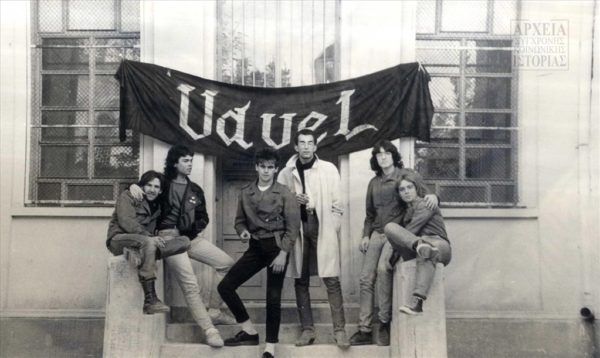
Another musical trend of the period was the effort made by a number of artists to combine rock with entechno music, including the Katsimihas brothers, notably on their popular album Zesta Pota (1985), and Vasilis Papakonstantinou. (73) Papakonstantinou had participated in politically engaged song recordings during the previous decade. However, his albums Fovamai (1982) and Diairesi (1984) reveal a shift in his artistic orientation, perhaps encapsulated in the following lyrics from the song “Ase Me na Kano Lathos” (“Let Me Make a Mistake”), from Diairesi: “Don’t talk to me about conquests and mass structures. Just tell me how two friends spend the night in a gloomy basement. The siren screams overhead, the syringe empties, and the blood flows warm.” It is worth noting that elements of rock music were also incorporated by artists who were not rock musicians in the narrow sense. A characteristic example is the work of Lina Nikolakopoulou, which combined rock influences with other musical genres, such as elafrolaiko, a form of Greek popular music. (74)
With regard to the formation of publics during the “second post-dictatorship phase”, a notable development was the emergence of a new type of concert. These were no longer concerts intended to mobilise large crowds politically, as, for example, in the concert depicted in Songs of Fire. Instead, their atmosphere and their appeal to audiences favoured small groups with loose forms of cohesion. An emblematic event in this respect was the 1983 Party at Vouliagmeni, organised by Loukianos Kilaidonis. The atmosphere is illustrated by the fact that audience members were free to move around the venue, enjoy the beach and swim during the concert. A similarly relaxed atmosphere, conducive to small groups of friends rather than larger collectivities preparing for social confrontation, characterised the “end-of-summer concerts” organised by Nikos Papazoglou towards the end of the 1980s. (75)
This period also witnessed developments in rebetiko, folk “demotika tragoudia” and traditional music. According to Daphne Tragaki, a revival of rebetiko had already begun during the dictatorship, thanks to the writings of Elias Petropoulos. (76) Petropoulos presented rebetiko as synonymous with the defiant mangas—the rebellious, streetwise figure—and with a fascinating, mysterious world at odds with dominant social norms. Such representations were also emphasised in the autobiographies of rebetiko musicians, as well as in studies of the genre by non-Greek researchers published during the 1970s and 1980s. During the 1980s, rebetiko became the subject of films and television series, including the film rebetico directed by Costas Ferris (1983) and the series To Minore tis Avgis (1983–84). At the same time, rebetiko and the zeibekiko dance became hallmarks of the entertainment enjoyed by members of PASOK governments, including Prime Minister Andreas Papandreou. (77)
More broadly, the revival of rebetiko, together with developments such as renewed interest in folk and Byzantine music, formed part of what Eleni Kallimopoulou describes as a “broader turn towards tradition”. This turn involved the (re)invention of tradition, through which musical forms from the past were reconstructed and reinterpreted. (78) This context also helps explain the incorporation of elements of rebetiko and folk (dimotiki) music into albums such as Giorgos Dalaras’s Ta Tragoudia Mou. Live ston Orfea (1983), which sold more than 700,000 copies. (79)
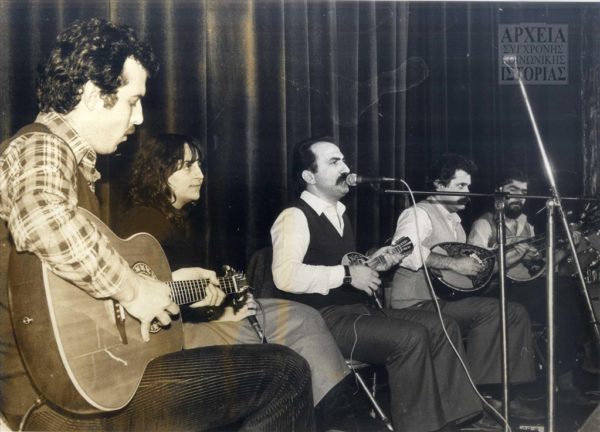
Finally, the second post-dictatorship phase saw the emergence of a style of musical consumption characterised by an unashamed desire for luxury and ostentation. Venues such as clubs and pistes—nightclubs featuring live greek popular music—began to proliferate, offering audiences the opportunity to listen to Greek and international popular music. Their décor conveyed an emphasis on the display of luxury. This aesthetic became apparent in pistes (bouzoukia venues), as well as in clubs and cafés in central Athens and in suburbs such as Glyfada, from the early to mid-1980s. Whisky, consumed in copious quantities, became a hallmark of these venues, particularly the bouzoukia. (80) Prominent performers who rose to fame in the bouzoukia during this period included Lefteris Pantazis, known as LEPA, and Angela Dimitriou. Towards the end of the decade, this trend spread to the western suburbs of Athens, where patrons of similar establishments in other parts of the city created comparable venues. (81) As noted above, the aesthetic of luxury was also promoted by the magazine Klik, which first appeared towards the end of the decade. (82) This trend was also associated with the emergence of a youth audience which, according to Giorgos Diakoumakos, was characterised by conformist tendencies and an aversion to collective action. (83) Within universities, this audience supported the dominant student political factions of the period: DAP-NDFK, affiliated with New Democracy, and PASP, affiliated with PASOK. Their support, however, was often passive, in the sense that students did not necessarily mobilise to advance these factions’ political agendas. (84) This audience embraced the destigmatisation of luxury, a trend that continued into subsequent decades and became a hegemonic feature of student leisure culture, as illustrated, for example, by trips to Mykonos and parties organised by DAP-NDFK and PASP. This is one of the clearest examples of how the period under study marked the beginning of developments that extended well beyond 1990.
(66) Παναγιωτόπουλος, «Τραγούδι και Πολιτική», σ. 268.
(67) Γιάννης Ν. Κολοβός, Κοινωνικά απόβλητα; Η ιστορία της πανκ σκηνής στην Αθήνα, 1979-2015, Αθήνα 2015, σ. 147-167. Για τους πανκ στην Αθήνα και την Θεσσαλονίκη, βλ. Μποζίνης, Ροκ παγκοσμιότητα, σσ.. 388-414. Επίσης, βλ. και Αντώνης Ε. Αστρινάκης, Νεανικές Υποκουλτούρες. Παρεκκλίνουσες υποκουλτούρες της νεολαίας της εργατικής τάξης. Η βρετανική θεώρηση και η ελληνική εμπειρία, Αθήνα 1991. Θανάσης Μουτσόπουλος, Το Αθηναϊκό Underground, Αθήνα 2012.
(68) Κολοβός, Κοινωνικά απόβλητα;, σ. 191-240.
(69) Σύμφωνα με το Νίκο Σούζα, στη δεκαετία του 80 υπήρχε μια διαπλοκή ανάμεσα σε κινηματικά εγχειρήματα, όπως σε καταλήψεις στέγης/αυτοδιαχειριζόμενα στέκια, αυτοδιαχειριζόμενοι ραδιοφωνικοί σταθμοί και η αυτοοργανωμένη μουσική σκηνή. Κοινά στοιχεία είναι η αντι-εμπορευματική και αντι-ιεραρχική στάση, καθώς και η εναντίωση σε ΜΜΕ που ελέγχονταν από το Κράτος ή από ιδιωτικά συμφέροντα. Βλ. Νίκος Σούζας, «Σταμάτα να μιλάς για θάνατο μωρό μου». Πολιτική και κουλτούρα στο ανταγωνιστικό κίνημα στην Ελλάδα 1974-1998, Θεσσαλονίκη 2015.
(70) Ευάγγελος Λαγός, «Rock in Athens. Νεολαία και μαζικός πολιτισμός», στο Βαμβακάς, Παναγιωτόπουλος (επιμ.), Η Ελλάδα στη δεκαετία του ’80 , σ. 517-519
(71) Κολοβός, Κοινωνικά απόβλητα;, σσ. 221-224.
(72) Παναγιώτης Πετρίχος, «Χέβι μέταλ. Εφηβική επιθετικότητα στον αντίποδα της κουλτούρας αμφισβήτησης», στο Βαμβακάς, Παναγιωτόπουλος (επιμ.), Η Ελλάδα στη δεκαετία του ’80 , σ. 652-654.
(73) Μποζίνης, Ροκ Παγκοσμιότητα, σ. 418-419.
(74) Ιωάννης Παπαγεωργίου, «Νικολακοπούλου, Λίνα. Εκλεκτικιστική στιχουργία και όψεις αναμόρφωσης του μαζικού τραγουδιού», στο Βαμβακάς, Παναγιωτόπουλος (επιμ.), Η Ελλάδα στη δεκαετία του ’80 , σ. 370-372.
(75) Σοφία «Παπάζογλου, Νίκος. Ροκ φόρμα, λαϊκό τραγούδι, συναυλία νέου τύπου», στο Βαμβακάς, Παναγιωτόπουλος (επιμ.), Η Ελλάδα στη δεκαετία του ’80 , σ. 425-426.
(76) Dafni Tragaki, Rebetiko Worlds. Ethnomusicology and ethnography in the city, Newcastle 2007, σ. 109-145.
(77) Για τη σχέση ρεμπέτικου με την πολιτική, ιδίως στην περίπτωση του ΠΑΣΟΚ, βλ. Σπύρος Σοφός, «Λαϊκή ταυτότητα και πολιτική κουλτούρα στη μεταδικτατορική Ελλάδα: προς μια πολιτισμική προσέγγιση του λαϊκιστικού φαινομένου», στο Νίκος Δεμερτζής (επιμ.), Η ελληνική πολιτική κουλτούρα σήμερα, Αθήνα 1994, σ. 133-157.
(78) Eleni Kallimopoulou, Paradosiaka: Music, Meaning and Identity in Modern Greece, Farnham 2009, σ. 1-12. Για την «ευρύτερη στροφή», βλ. ιδίως το ίδιο στη σελ. 4. Επιπλέον, για το φύλο των μουσικών που ασχολούνταν με αυτό το είδος μουσικής στις επόμενες από τις υπό εξέταση δεκαετίες, βλ. Reguina Hatzipetrou-Andronikou, “Trajectoires de pionnières entre tradition et renouveau. Jeunes femmes instrumentistes de musique traditionnelle en Grèce”, in Julie Gothuey, Quidora Morales La Mura, François Oudin, Thomas Pierre, Jérémy Sinigaglia, Sabrina Sinigaglia-Amadio (επιμ.), Enquêter sur le genre. Terrains et pratiques, Nancy 2011, σ. 29-42.
(79) Γιάννης Κοντογιάννης, Δημήτρης Ν. Μανιάτης, «Νταλάρας, Γιώργος. Ο μετασχηματισμός του λαϊκού τραγουδιστή σε λόγια και εθνική φυσιογνωμία», στο Βαμβακάς, Παναγιωτόπουλος (επιμ.), Η Ελλάδα στη δεκαετία του ’80 , σ. 373-375.
(80) Tryfon Bampilis, Greek Whisky: The Localization of a global commodity, New York/London 2013, σ. 123.
(81) Νικόλας Σουλιώτης, «Κατασκευάζοντας πολυτελείς χώρους διασκέδασης σε ένα λαϊκό προάστειο. Κοινωνιολογική προσέγγιση των οικονομικών πρακτικών της αγοράς του Μπουρναζίου στο Περιστέρι», Δοκιμές, 13-14 (2005), σ. 41-40. Όπως πολύ εύστοχα επισήμανε ο Νικόλας Σουλιώτης σε επικοινωνία που είχα μαζί του, η αισθητική της πολυτέλειας προϋπάρχει της δεκαετίας του ΄80. Η διερεύνηση διαφορετικών εκδοχών πολυτέλειας που δεξιώνονται διαφορετικά κοινά είναι αντικείμενο, όπως επισημαίνει, που χρήζει περαιτέρω ανάλυσης. Βέβαια, όπως προσθέτει, η αισθητική αυτή δεν σήμαινε και την πλήρη υπέρβαση ταξικών ορίων, καθώς διαφορετικά βίωναν άτομα από τα ανώτερα στρώματα την χλιδή σε σχέση με τα μεσαία και τα κατώτερα στρώματα στους χώρους ψυχαγωγίας. Βλ. Νίκος Σουλιώτης, «Διεύρυνση του κοινού, εκλέπτυνση των διακρίσεων: κοινωνική κατασκευή της ζήτησης στην αθηναϊκή συμβολική οικονομία από τα μέσα της δεκαετίας του ’70 ως σήμερα», στο Δημήτρης Εμμανουήλ, Έρση Ζακοπούλου, Θωμάς Μαλούτας, Ρωξάνη Καυταντζόγλου και Ανδρομάχη Χατζηγιάννη, Κοινωνικοί και χωρικοί μετασχηματισμοί στην Αθήνα του 21ου αιώνα, Αθήνα 2009, σ. 279-320.
(82) Για το περιοδικό Κλικ και, ιδίως, την επίδρασή του σε αντιλήψεις περί φύλου, βλ. Παναγιώτης Ζεστανάκης, «Εκδοχές του ανδρισμού στα ελληνικά lifestyle έντυπα της δεκαετίας του ’80: Playboy, Status, Klik (1985–1990)», αδημοσίευτη μεταπτυχιακή διπλωματική εργασία, Ρέθυμνο, 2008.
(83) Γιώργος Διακουμάκος, «Πολιτιστικές πρακτικές και πολιτικές αντιλήψεις: Οι κεντρικές ελληνικές (πολιτικές) υποκουλτούρες», αδημοσίευτη διδακτορική διατριβή, Αθήνα 2010, σ. 192-199.
(84) Η ΔΑΠ-ΝΔΦΚ από το 1987 αποκτά σταθερά και αδιάλειπτα την πρωτοκαθεδρία στις φοιτητικές εκλογές.
Theatre
The theatre sector underwent a period of major reforms during the 1980s, as Mavromoustakos rightly observes. (85) Two significant developments were the establishment and proliferation of Municipal Regional Theatres (Dimotika Perifereiaka Theatra, or DI.PE.THE.), as well as the consolidation and formal institutionalisation, in 1982, of state subsidies for non-state theatrical organisations. These subsidies had first been introduced in 1978.
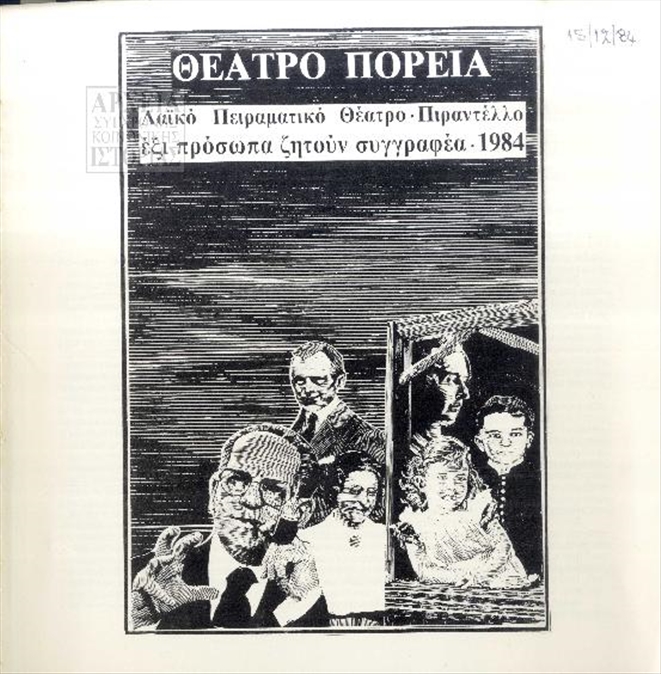
The consolidation of a system of state subsidies that had previously been administered on an occasional basis can be interpreted as an aspect of the expansion of the state. As Vamvakas and Panagiotopoulos argue, this expansion involved an enhanced role for the state and greater state intervention, in this case in the cultural sphere. (86) Furthermore, the number of theatre venues increased during this period, and playwrights became loosely affiliated with particular theatre companies. Greek theatrical production also grew more diverse. For example, there was a striking increase in the number of theatre companies targeting children and young people. (87) Finally, performances in local dialects, such as Pontic, Lesvos and Symi, became more prominent. (88)
------------------------------------------------------
(85) Μαυρομούστακος, Το θέατρο, σ. 169-221, ιδίως 220.
(86) Άλλο παράδειγμα που επιβεβαιώνει αυτή την τάση και δεν περιορίζεται στον χώρο του θεάτρου είναι η ίδρυση πολιτιστικών κέντρων, τα οποία για πρώτη φορά υποστηρίζονταν και χρηματοδοτούνταν από το κράτος. Βλ. Ευάγγελος Λαγός, «Πολιτιστικά κέντρα. Θεσμικές παρεμβάσεις στη διαμόρφωση του ελεύθερου χρόνου», στο Βαμβακάς, Παναγιωτόπουλος (επιμ.), Η Ελλάδα στη δεκαετία του ’80 , σ. 477-478.
(87) Μαυρομούστακος, Το θέατρο, σ. 208-212.
(88) Βάλτερ Πούχνερ, «Το θέατρο στην ελληνική επαρχία», Παρνασσός, ΛΔ τόμος, 1992, σ. 200-231.
Literature
In poetry during this period, as to some extent in cinema as well, there was a pronounced preoccupation with “personal life”, a tendency that Ilias Kefalas described as the “overprotection of personal life”. (89) Representative works include Jenny Mastoraki’s Istories gia ta vathia (1983) and Maria Laina’s Diko tis (1985). This period also witnessed a marked expansion of prose fiction. (90) Novels dealing with history were particularly popular. These included narratives tracing the lives of individuals who had been active on the Left. Such accounts tended to be self-critical rather than self-justifying, in contrast to the broader cultural climate of the previous decade—with exceptions, of course, such as Alexandrou’s Mission Box (To Kivotio, 1975), mentioned above.
Representative examples include Alki Zei’s Arravoniastikia tou Achillea (1987) and Chronis Missios’s …kala, esi skotothikes noris (1985). The following passage from Zei’s Arravoniastikia tou Achillea is indicative of her approach to the recent past: “None of our generation managed to get there in time. Other things always got there first. War, December, the Civil War, the Dictatorship. We keep remembering the past. People are tired of hearing about it. We just can’t seem to forget; it is our whole life. How many times have we said we would start over again! It wasn’t courage that we lacked…”
------------------------------------------------------
(89) Ηλίας Κεφάλας, Ανθολογία σύγχρονης ελληνικής ποίησης. Η δεκαετία του 1980 (ιδιωτικό όραμα), Αθήνα 1989. Κατά τον Beaton, βέβαια, αυτή η τάση υπάρχει ήδη από τη δεκαετία του ’70. Βλ. Beaton, Εισαγωγή, σ. 347.
(90) Beaton, Εισαγωγή, σ. 355-368.
By Way of a Conclusion
“Art as culture” contributed to shaping, while also being shaped by, characteristics of both the first and the second phases of the Metapolitefsi (post-dictatorship) period. The invocation of the recent past with the aim of vindicating the Left, together with the corresponding circulation of Left-wing symbols through music, cinema and theatre, formed part of the “dualism of power” that Voulgaris identifies in the period from 1974 to the early 1980s.
Nevertheless, the politicisation of art was by no means complete during these years. In the 1980s, forms of politicised art that had flourished in the preceding years began to lose their popularity, despite receiving institutional recognition, for example through their incorporation into school commemorations. To some extent, this contributed to, while also being shaped by, a process characteristic of the second phase of the post-dictatorship period, identified by Vamvakas and Panagiotopoulos: the role of the “political” in shaping social relations gradually diminished. Art during this period, however, was not characterised by complete depoliticisation. New forms of interaction between politics and art emerged, as illustrated, for example, by the convergence of punk music and anti-authoritarian ideology. Furthermore, although artists associated with the Left increasingly adopted a self-critical stance towards the Left’s politics, both past and present, their works did not lose their social resonance.
More broadly, neither art nor the post-dictatorship period as a whole followed an entirely linear trajectory from the positive valuation of the collective in the early post-dictatorship years to a turn towards individualism during or towards the end of the 1980s. Art became a field for experimentation with the relationship between the individual and collectivity, whether politically organised or not. These experiments were shaped by developments in both politics and patterns of consumption. A wide range of such experiments took place in various settings as Theodorakis’s mass concerts in 1975, bars and pubs, the Party at Vouliagmeni, watching videos at home, and the clubs that emerged towards the end of the 1980s. One outcome of these experiments was the formation of numerous and diverse publics. A careful examination of these publics brings to light the variety of ways in which the Metapolitefsi period manifested itself.
Acknowledgements
I would like to thank Kyriaki Adaloglou, Orsalia Kassaveti and Nikos Souliotis for their comments. Any errors, of course, remain entirely my own.
Tools

