
Vangelis Karamanolakis, Professor of History at the National and Kapodistrian University of Athens
Kostis Karpozilos, Assistant Professor of History at Panteion University
The collapse of the dictatorship in the summer of 1974 marks an undeniable turning point in modern Greek history: the emergence of the Third Hellenic Republic signalled the end of an era that had begun with the Civil War (1946–1949). The era had stabilised during the years of the ‘cachectic Democracy’ and had culminated in the seven-year military regime. The demand for democratisation, combined with the radical legacy bequeathed by the anti-dictatorship movement, meant that the Metapolitefsi was characterised by the dynamic emergence of social and political movements. Through their words and actions, they defined the new balances of power and the priorities of the era. In this context, the decline or transformation of older forms of collective organisation and advocacy stands out. Thus, for example, the peace movement—which had been the core of the politicisation of an entire generation in the 1960s—took on different dimensions in the 1970s and 1980s, complementing other forms of collective advocacy. In fact, the landscape of new social movements serves as a guide to the broader transformations of Greek society. Furthermore, an ongoing priority for contemporary academic research remains its in-depth study.
The School Student Movement: the key protagonist
The main protagonist of the Metapolitefsi was the student movement. The dynamism of the school student movement was nothing new to Greek society, given the constant presence of student demands in the post-war period. Here, however, we are dealing with something different: the emergence of the student movement as an arena for the clash of competing political agendas, its involvement in social and political demands ranging from labour mobilisations to issue-based movements, and its dominant symbolic status as a result of its participation in the struggle against the dictatorship. In the collective consciousness of Greek society, the student movement had established itself as the new collective protagonist. The students’ active opposition to the dictatorial regime during the period 1971–1973, and in particular the occupation of the Law School, the Polytechnic uprising and its heroic conclusion, had given them a prominent role in political and social affairs and, of course, within the universities themselves. At the same time, and once again on the back of the anti- dictatorship struggle, the student movement appeared much stronger and was no longer confined, as it had been in the 1960s, to the Left.
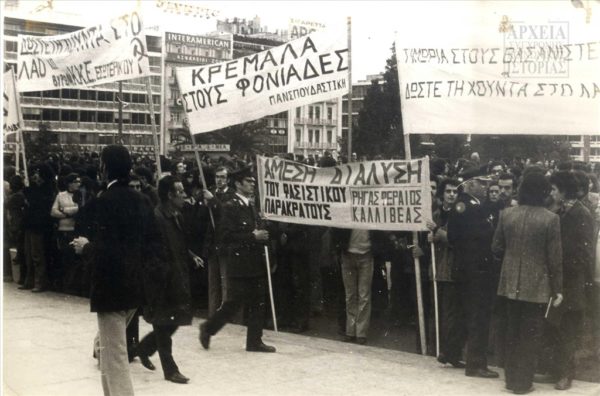
The 1970s and 1980s were marked by a surge in the student population, a consequence of demographic trends, the expansion of higher education, and the pressure for social advancement amongst broad sections of society (1).
Thousands of students gathered at universities to take part in general assemblies, putting forward a range of demands. This intense politicisation was reflected in the formation of factions, closely linked to the political parties of the time, which took part in the elections organised by the re-established National Union of Greek Students (EFEE). The influence of the communist and non-communist left in the early years of the Metapolitefsi was more than evident: the KKE Interior (Anti-EFEE and subsequently Panspoudastiki) and the KKE Interior (Democratic Struggle/Democratic Unity) collectively accounted for 50 per cent of the vote in the student elections, whilst the rise of PASP (which was linked to PASOK) was dynamic and the influence of movements associated with organisations of the revolutionary and extra-parliamentary left remained steady.
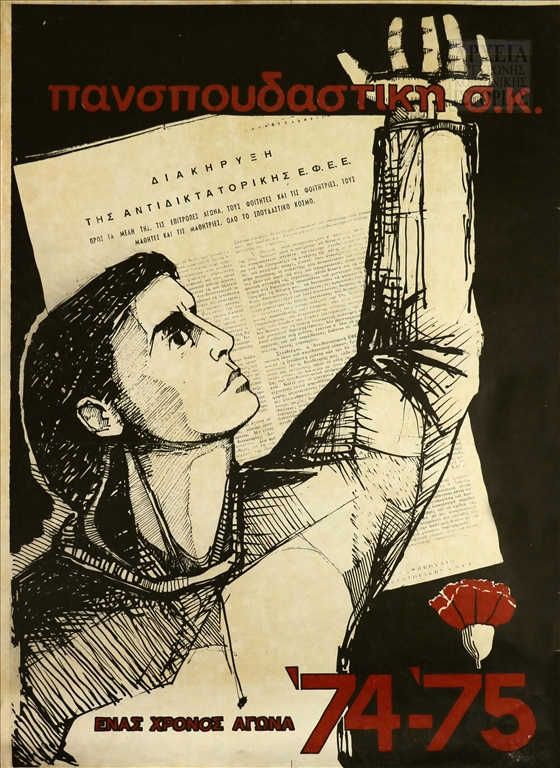
During this period (1974–1981), the main demand of the student movement was purge of junta-era personnel (de-Chountisation). That was the purging of universities of academic staff who had collaborated with the military regime, resulting in the dismissal of 10 per cent of the academic staff at the time. A comparison with other sectors of public administration (e.g. the judiciary or local government) demonstrates the dynamism and capacity of the student movement to impose its terms within the new academic landscape. The ‘de- juntification’ movement crystallised the moral superiority of the student body over the teaching staff in relation to their stance during the years of the junta. Moreover, it laid the foundations for the active involvement of students in day-to-day academic life (as, for example, in the subsequent 1982 framework law on student participation and co-management).
In May 1976, the First Post-Dictatorship All-Student Congress was held, with its main themes being the removal of the dictatorship’s legacy from universities, the improvement of studies and living conditions. Representatives from student unions in Greece and abroad took part, and the composition of the delegates reflected the dominance of the left within the movement. The main themes of the Congress were the de-centralisation and restructuring of education, with the nature of higher education being the central issue. This debate was not new to Greek society. It had begun in the 1960s, following the massification of university education and, in particular, after the abolition of tuition fees by the centrist government of Georgios Papandreou in 1963–1965. It had been interrupted by the dictatorship and was now resuming, bearing the burden of the seven-year dictatorship.
The New Democracy government sought to address these demands when, in September 1978, it tabled a bill on higher education, which was passed during the summer session of Parliament and became Law 815‘regulating matters concerning the organisation and operation of universities’. It was clear from the Act that the demands which had arisen from the very first days of the Metapolitefsi were not being met, as the regulations imposed were timid and conservative in relation to the momentum that had built up both within and outside the institutions. Consequently, the bill provoked a backlash from the political forces of the Centre and, above all, the Left, which even walked out of Parliament during the vote. Student groups also reacted particularly strongly to the bill, accusing the government of using it to intensify the academic workload.

The reaction to the law caused divisions within the student movement. Despite the widespread opposition, there were differences of opinion as to which strategy should be adopted. In contrast to the stance of the ‘official’ student factions, which insisted on adopting familiar forms of protest, such as demonstrations and boycotting lectures, dozens of student unions resorted to more intense forms of mobilization. Τhe most notable were the occupations of university faculties. In the rhetoric of their supporters, the occupation linked the students’ struggle to the Polytechnic uprising of November 1973, as well as to the major factory strikes that characterised those early years of the post-dictatorship era. This development was unprecedented, as the initiative did not come from the ‘major’ student factions of the time, but from a constellation of movements, groups and collectives that emerged from the crisis of the traditional model of political mobilisation. The currents of dissent within the student body were intertwined with the first serious crisis to be faced by the political organisations of the communist left since 1974. The split within Rigas Feraios, the youth wing of the KKE (Greek Communist Party), and the organised withdrawal of 400 members and officials from the KNE (Communist Youth of Greece) and the KKE highlighted how domestic and international developments (e.g. Poland) were fuelling the forces of disengagement. As regards the student movement, this crisis was reflected in the dismantling of its hitherto defining characteristics: a decline in mass participation, as reflected in the ever-increasing abstention from student elections, the strengthening of the presence of DAP-NDFK (which was linked to New Democracy), and the decline in the influence of left-wing party groups.
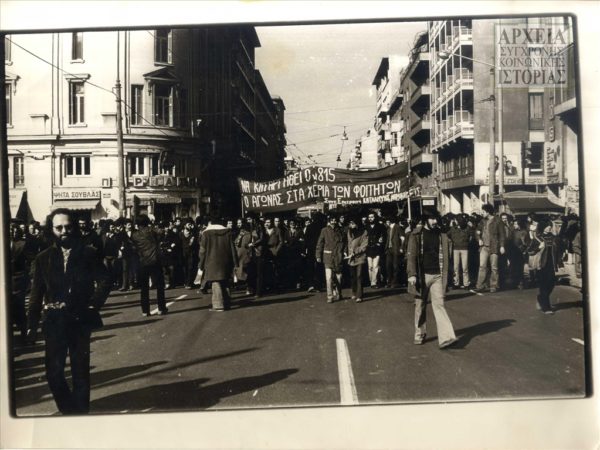
The 1979–1980 occupation movement ultimately served as an arena for multiple challenges: against government policy, but also against the ‘burden’ of the political youth of the early post-dictatorship era. One word perhaps encapsulates this challenge: ‘autonomy’. These developments reflected, within the student movement, the weariness with the political discourse of the early post-dictatorship era and the emergence of new questions concerning the relationship between the political and the social. As encapsulated in the slogan which was scrawled on the walls of university faculties in the late 1970s: ‘Apart from imperialism, there is also loneliness’.
------------------------------------------------------
(1) See Vangelis Karamanolakis, "From the fall of the junta to Change: the timid transition of higher education in Greece (1974–1982)", *Espacio, Tiempo y Educación*, 2(2), 33–48. doi: http://dx.doi.org/10.14516/ete.2015.002.002.003 and Nikolaos Papadogiannis, *Militant around the Clock? Left-Wing Youth Politics, Leisure, and Sexuality in Post-Dictatorship Greece,* 1974–1981, New York: Berghahn Books, 2015. For a broader overview of the student movement and other movements of the period, see also the relevant entries in Vasilis Vamvakas-Panagis Panagiotopoulos, Η Ελλάδα στη δεκαετία του '80. Κοινωνικό, πολιτικό και πολιτισμικό λεξικό [Greece in the 1980s: A Social, Political and Cultural Dictionary], Thessaloniki, Epikentro, 2014.
Between Autonomy and Rupture
In the changing new landscape, the idea of autonomy within social movements was gaining ever greater influence. Signs of this were the emergence of movements and groups that incorporated the concept into their names, as well as the proliferation of publications. They raised the question of a different model of political organisation or explored the substance of social demands, which now also included new issues such as environmental protection. (2)
In the changing new landscape, the idea of autonomy within social movements was gaining ever greater influence. Signs of this were the emergence of movements and groups that incorporated the concept into their names, as well as the proliferation of publications. They raised the question of a different model of political organisation or explored the substance of social demands, which now also included new issues such as environmental protection. (2)
The momentum of the feminist movement was a visible indication of these trends. Towards the end of the decade, the momentum of feminist demands highlighted the growing challenge to a traditional model that regarded ‘women’s’ organisations as merely an extension of political formations. This shift is evident, first and foremost, in the emergence of radical demands and analyses concerning bodily autonomy, freedom of sexual orientation, and the challenge to patriarchal norms. At the same time, there was a proliferation of organisations and movements centred on the idea of autonomous women’s groups. This development was reflected in the publication, in 1978, of the periodical *For Women’s Liberation* and the subsequent establishment of similar decentralised groups within university faculties. 6014_001. low This progress went hand in hand with the growth of autonomous groups and organisations that had emerged in the wake of the student movement of the 1979/1980 academic year, creating a colourful, dynamic and radical current. Although it was a minority, had a manifold impact on shaping public debate and the direction of mass movements.
The Greek Homosexual Liberation Movement (AKOE) capitalised on the political opportunities offered by the first – and most radical – period of the Metapolitefsi. In their first manifesto, the members introduced themselves with the phrase ‘WE are the Greek homosexuals’, now openly articulating a first-person, dissenting discourse. In the same year, the publishing house ‘Exantas’ published Loukas Theodorakopoulos’s seminal work *Kaidas*, in which the author – and later a key member of AKOE – traced the history of the suppression of homosexual desire under the dictatorship. The movement’s primary target was the Karamanlis government’s proposed bill ‘on venereal diseases’, which criminalised the public expression of homosexual desire. In 1978, the magazine ‘AMFI’, the AKOE’s official publication, was launched. In 1981, ‘Kraximo’ began its publishing journey, edited by the transgender woman sex worker Paola. These were the beginnings of a movement that had come into conflict with a series of hegemonic discourses which portrayed – and continue to portray – homosexuality in terms of moral, physical, psychiatric and legal deviance. (3)
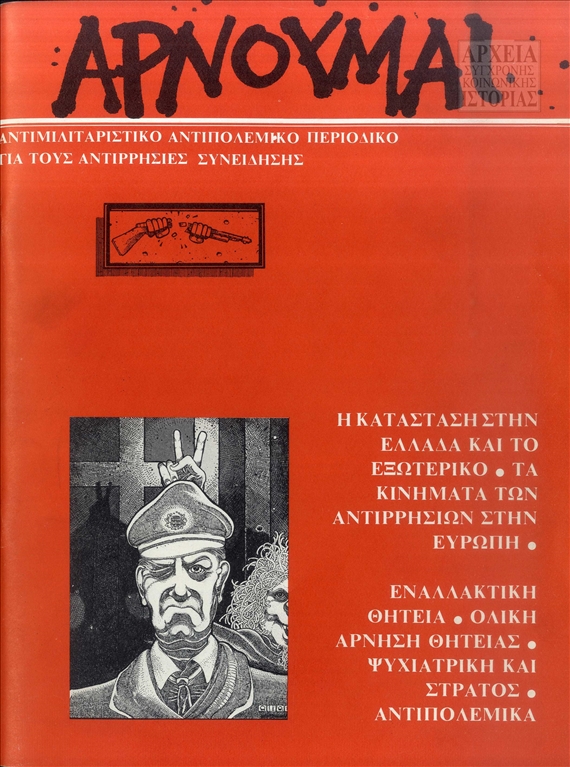
In the same vein, we should also examine the emergence in the early 1980s of a new movement, unique to Greek society: ‘For the Army’. This movement, which was primarily associated with the extra-parliamentary Left and the Communist Party of Greece Interior (KKE Int.), championed the rights of conscripts, treating them as citizens serving in the armed forces. Through the creation of committees comprising soldiers and civilians, and by employing an unprecedented range of actions both outside (demonstrations, protests) and within the army (collective complaints, refusal to eat, reading newspapers, etc.), they brought to the fore an issue that had until then been taboo in Greek society. The presence of the first Greek conscientious objectors on non-religious grounds was also particularly significant in this regard.
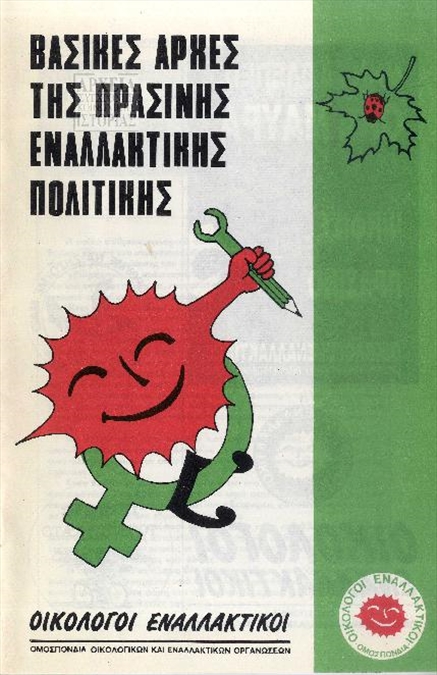
A defining feature of both these latter movements was their ongoing dialogue with corresponding developments abroad, as well as their solidarity and collaboration with relevant international organisations. In this regard, the emergence of the environmental movement towards the end of the 1980s is particularly telling, through the activities of autonomous environmental groups across the country. The Chernobyl nuclear accident in 1986 raised awareness amongst both the international and Greek public. Co-ordination amongst the various environmental organisations led to the creation of the Federation of Environmental and Alternative Organisations – Environmentalists and Alternatives, which took part in the parliamentary elections of November 1989, winning 0.58 per cent of the vote and electing one female MP.
------------------------------------------------------
(1) See, for example, the catalogue of the exhibition *Feminism in the Years of the Metapolitefsi 1974–1990: Ideas, Collectives, Demands*, organised by the Hellenic Parliament Foundation for Parliamentarism and Democracy, Athens 2017.
(2) See Theodosis Geltis, [Ο ομοφυλόφυλος ως μετέωρο σημαίνον: η πλευρά του ΛΟΑΤΚΙ Τύπου στην αναπαράσταση του ομοφυλόφιλου άνδρα], ‘The Homosexual as a Floating Signifier: The Role of the LGBTQI Press in the Representation of the Homosexual Man’, unpublished postgraduate dissertation, Athens 2016.
Tools


